

If money is the lifeblood of your business, then your Chart of Accounts (CoA) is what keeps everything organized, traceable, and under control.
Every transaction your business makes, whether sales, expenses, payments, or investments, needs a place to be recorded. Without structure, financial data quickly becomes confusing, unreliable, and difficult to use.
That’s why understanding the Chart of Accounts is not just an accounting task; it’s a business necessity.
What Is a Chart of Accounts?
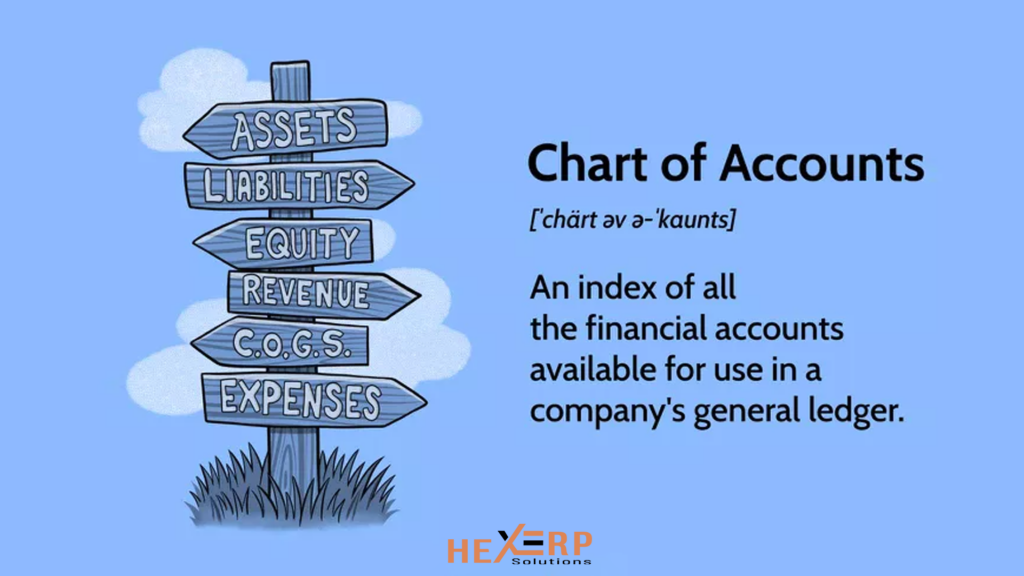
A Chart of Accounts (CoA) is a complete list of all the financial accounts your business uses to organize and record transactions.
Each account represents a category, such as:
- Sales revenue
- Expenses (rent, salaries, marketing)
- Assets (cash, inventory, equipment)
- Liabilities (loans, payables)
In simple terms:
Every movement of money in your business must be recorded in one of these accounts.
According to Investopedia, a Chart of Accounts is “an index of all the financial accounts in a company’s general ledger.”
Why Is a Chart of Accounts Important?
Without a proper Chart of Accounts, businesses often face:
- Unclear financial reports
- Difficulty tracking income and expenses
- Errors during tax preparation
- Poor decision-making due to a lack of visibility
A well-structured CoA helps you:
- Understand where your money is going
- Track profitability accurately
- Stay compliant with financial regulations
- Make faster, data-driven decisions
It transforms your financial data into something you can actually use.
The 5 Main Types of Accounts in a Chart of Accounts
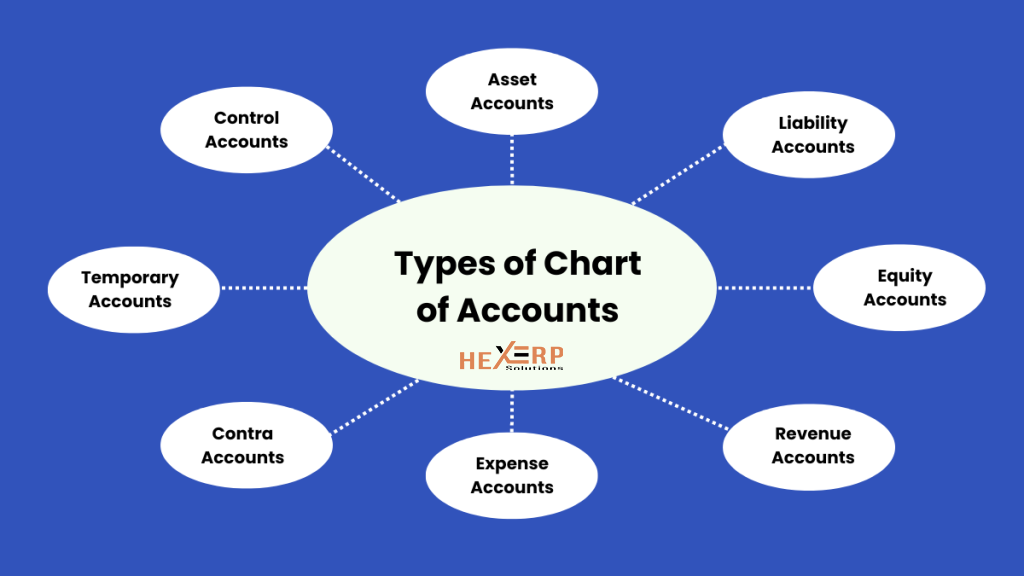
Most businesses structure their CoA around five core categories:
1. Assets
What your business owns ( cash, inventory, equipment)
2. Liabilities
What your business owes (loans, unpaid bills)
3. Equity
Owner’s share in the business
4. Income (Revenue)
Money coming into the business
5. Expenses
Costs of running the business
Chart of Accounts Example
Let’s say you run a design studio:
- Client payment → Income
- Salary payment → Expense
- Laptop purchase → Asset
- Business loan → Liability
Each transaction is categorized, allowing your reports to reflect your real financial position at any time.
Why Manual Systems and Spreadsheets Fail
Setting up a Chart of Accounts is one thing; managing it effectively is another. Many businesses start with spreadsheets or basic tools. But as operations grow, these systems begin to break.
Common problems include:
- Transactions being misclassified
- Reports are not updating in real time
- Increased human error
- Duplicate or inconsistent data
- Lack of visibility across departments
Over time, this leads to delayed decisions, financial confusion, and missed opportunities.
This is where most businesses struggle, not because they don’t understand accounting, but because their system can’t keep up.
Take Control of Your Chart of Accounts with HEX ERP
Managing a Chart of Accounts manually might work early on, but as your business grows, complexity increases.
This is exactly where HEXERP becomes essential.
With HEX ERP, you can:
- Automatically categorize transactions in real time
- Build a structured and scalable Coa
- Generate instant financial reports and dashboards
- Reduce costly human errors
- Stay audit-ready and compliant
Instead of reacting to financial issues, you stay in control every day.
The result: better decisions, faster growth, and complete financial clarity.
How to Set Up a COA (The Right Way)
To build an effective CoA:
- Start with the five main categories
- Use clear and consistent naming
- Create sub-accounts based on your operations
- Keep the structure simple and scalable
- Review and update regularly
- Use a system that supports automation and accuracy
Your business generates financial data every single day. Without structure, that data becomes noise.
A well-designed Chart of Accounts gives you clarity, control, and confidence. It allows you to understand your business, make smarter decisions, and prepare for growth.
But more importantly, it requires the right system to manage it effectively.
If you’re tired of unclear reports, manual tracking, and financial guesswork, it’s time to upgrade. Discover how HEX ERP can help you manage your Coa with accuracy and ease.