
As you already know, running a business means keeping your entire supply chain in constant, fluid motion. But too often, this vital process feels like trying to navigate a complex labyrinth in the dark. Things fall through the cracks: critical deliveries are missed, inventory piles up, quality mishaps occur, maintenance is forgotten, or worse, unplanned downtime hits, costing you money and trust.
This isn’t just inefficient; it’s a drain on your resources and morale. It feels like you’re constantly reacting to problems rather than proactively preventing them.
But what if you could illuminate that labyrinth? What if you had a system that allowed you to see every turn, anticipate every challenge, and guide your products with unwavering precision?
With HEX ERP’s fully integrated Supply Chain Suite, you’re intelligently forecasting demand, meticulously preparing for production, and strategically optimizing every single step from raw material to final delivery. Whether you’re running a vast distribution hub or managing a complex product lifecycle from initial design to final delivery, this guide breaks down each crucial piece of the supply chain puzzle, showing you how to turn overwhelming complexity into empowering clarity.
1. Inventory: Know What You Have, Where It Is, and What It’s Worth
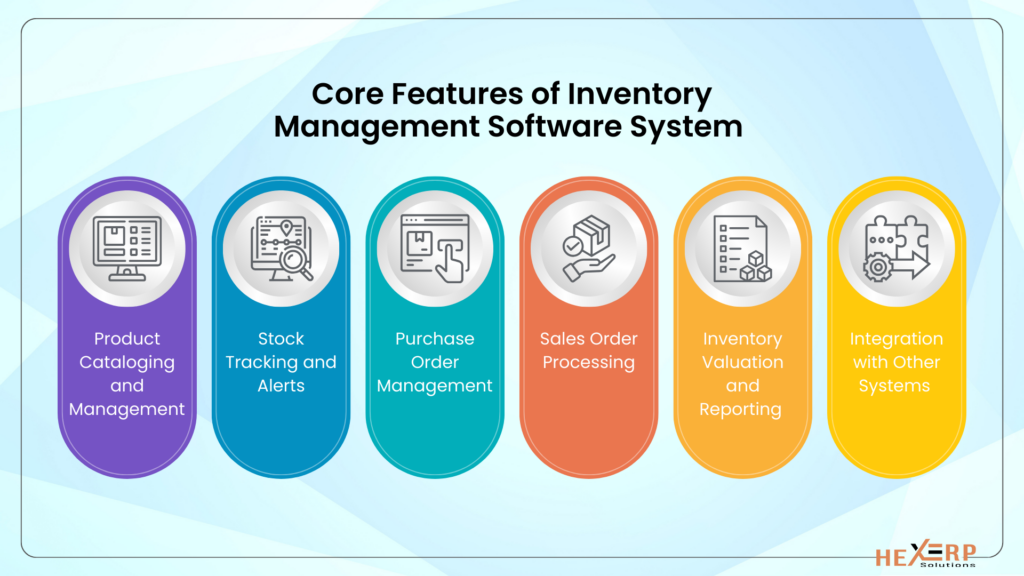
Your inventory is the lifeblood of your business. Without clear visibility, you’re flying blind. This module provides essential clarity.
Core Features & Highlights:
- Seamless Multi-Location Management: Track stock in real-time across all branches.
- Smart Reordering: Avoid stockouts and overstocking with automated thresholds and purchase suggestions.
- Precise Valuation & Traceability: Monitor true inventory value using FIFO, AVCO, or Standard methods plus serial and batch-level tracking.
- Quick Adjustments & Audits: Resolve stock issues fast, isolate damaged items, and keep records aligned with physical counts.
- Unified Dashboard: View all incoming, outgoing, and internal stock movements in one place for total control.
According to FounderJar’s report, ERP systems reduce inventory costs by an average of 11%, and best-in-class manufacturers have achieved up to 22% cost reduction.
2. Purchase: Control Spending with Smart Procurement
The Purchase module is fundamental to your supply chain, integrating directly with inventory and manufacturing to ensure raw materials and goods arrive efficiently, at the right price, and on time.
Key Supply Chain Connections:
- Automated PO Generation: When manufacturing identifies a shortage of raw materials (based on production plans), the system automatically creates a purchase order. This proactive approach ensures your production line never idles.
- Automatic Stock Update: As soon as items are received from a supplier and confirmed, your inventory levels are instantly updated, providing accurate stock counts for sales and production planning.
- Financial Accuracy: The system matches vendor bills to original purchase orders and incoming shipments, preventing overpayments and ensuring financial discrepancies are avoided across your supply chain.
As VERSA revealed, automated procurement improves accuracy, speeds up order processing, and strengthens supplier coordination.
3. Barcode: Fast, Error-Free Operations
Barcode technology is the unsung hero of efficiency, eliminating guesswork and drastically reducing human error across your warehouse and manufacturing operations. It’s like giving every item a precise digital identity.
What You Can Do & Supported Devices:
- Scan for All Movements: Instantly update stock status by scanning items in and out during receipt, delivery, or transfers. This replaces slow, error-prone manual data entry.
- Mobile Inventory Adjustments: Quickly perform spot checks or adjust for damaged items directly from the floor using a mobile device’s camera or a dedicated scanner.
- Manufacturing Validation: Operators on the production line can scan barcodes to confirm steps are complete or materials are consumed, instantly updating manufacturing orders and inventory.
- Flexible Devices: Works seamlessly with both traditional USB/Bluetooth barcode scanners and mobile devices/tablets with camera-based scanning.
An integrated ERP system reduces manual errors and boosts efficiency—improving accuracy by 30% and operations by 23%, according to findings from Panorama Consulting and Gartner.
4. Quality
True supply chain mastery means consistently delivering quality. HEX’s Quality Management lets you build control directly into your workflows, ensuring it’s an intrinsic part of your process.
Features & Reporting:
- Integrated Quality Checks: Define specific inspection points by product, operation, or vendor. The system automatically triggers checks during receipts, production, or before delivery.
- Detailed Documentation: If a defect is found, operators can easily document it with notes and photos and categorize the reason for rejection directly in the system.
- Instant Batch Control: Based on inspection results, instantly approve batches to move forward or reject them, preventing faulty products from continuing down the supply chain.
- Actionable Reports: Generate non-conformance reports, track vendor quality scores, and analyze production defect trends to pinpoint and resolve systemic issues.
5. Maintenance: Keep Equipment Running Without Guessing
Unplanned equipment downtime is a nightmare for any supply chain, leading to production halts and missed deadlines. The Maintenance module prevents this by shifting from reactive fixes to proactive care.
Features & Integrated Benefits:
- Preventive Maintenance Planning: Schedule routine servicing for machines based on fixed calendar dates (e.g., monthly) or actual operational hours (e.g., after every 100 hours of use). Get automated reminders.
- Efficient Repair Management: Operators can easily log internal maintenance requests. Assign technicians, track status in real-time, and log spare parts used, time spent, and resolution notes for every repair.
- Production Integration: Tie maintenance records directly to work centers. For critical equipment, the system can automatically halt related production work orders until the machine is marked as repaired, preventing further issues.
- Failure Trend Analysis: Identify recurring issues with specific machines by analyzing historical data, allowing you to plan more effective preventive maintenance and make informed investment decisions.
According to MoldStud , ERP maintenance modules reduce unplanned downtime and improve asset reliability, with manufacturers reporting up to 20% lower maintenance costs and a 25% boost in equipment uptime
6. Product Lifecycle Management (PLM): Turn Ideas Into Market-Ready Products
For companies that design, build, or constantly innovate, managing product changes, engineering revisions, and documentation across its entire lifespan can be incredibly complex. PLM helps you control this evolution—from initial concept to final production—all while syncing seamlessly with your Manufacturing operations.
Key Highlights:
- BoM Version Control: Every revision to a Bill of Materials (BoM) automatically creates a new version, allowing you to track changes, revert if needed, and ensure production always uses the latest approved recipe.
- Centralized Documentation: Attach relevant design files (CAD, PDFs), technical specifications, and other supporting documents directly to the product record, ensuring all critical information is easily accessible.
- Controlled Changes: Implement structured multi-level approval workflows for design changes or new product introductions. Manage formal Engineering Change Orders (ECOs) with trackable notes, ensuring controlled implementation across the supply chain.
7. Repairs: Service That Keeps Customers Loyal
In the world of supply chain, the journey doesn’t end at delivery. Products sometimes come back for repairs, and how you handle these exceptions significantly impacts customer satisfaction and your brand’s reputation.
With Repairs, you can:
- Manage Requests & Tracking: Easily log incoming repair requests from customers and track the complete lifecycle of a repair—from arrival, through the process, to its eventual return.
- Accurate Costing & Quoting: Accurately record all replaced parts and labor costs. Generate professional repair quotations for customers, outlining expenses.
- Warranty Integration: Automatically check product warranties based on serial numbers, ensuring accurate billing and honoring of agreements.
Supply Chain Strength, from Start to Scale
What truly makes HEX ERP a game-changer for your business?
It’s that every single module discussed above doesn’t operate in isolation; they talk to each other seamlessly and continuously. This means no more manual updates, no more fragmented data, and, crucially, no more miscommunication between your departments. You get a single, unified source of truth for your entire supply chain.
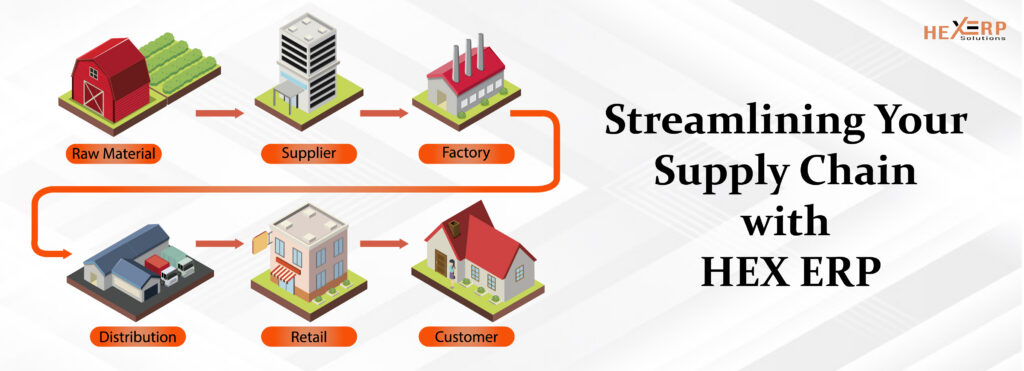
From the moment you initiate a raw material purchase → through its storage in inventory → its transformation in production → rigorous quality checks → final delivery to the customer → and even post-sales support and repairs—everything flows as one cohesive, intelligent system.
With HEX ERP, you will:
✅ Gain full visibility from your supplier’s door to your customer’s hands.
✅ Predict shortages before they ever impact your operations.
✅ Minimize waste, errors, and costly overstocking, boosting your profitability.
✅ Respond to market demands faster, with significantly less stress and more confidence.